
Understanding when to select a positive displacement pump versus a centrifugal pump is critical.
Pump selection can be a challenging task. Multiple options are available for each application, and every pump type comes with distinct advantages and drawbacks that must be carefully weighed. This article outlines prevalent pumping technologies and analyzes the merits and demerits of each pump category across various operating scenarios.
Key Factors Influencing Pump Selection
A wide range of criteria determine the optimal pump for a specific application. Defining project objectives and design intent upfront is essential. Downtime costs play a decisive role in the decision-making process. In many cases, one hour of production downtime equals the purchase price of a brand-new pump. Under such circumstances, pump reliability outweighs upfront purchase cost. For less critical service conditions, however, the pump’s price, operational expenditure and reliability collectively dictate which model delivers the best overall cost-performance ratio.
Two other core determinants of pump selection are fluid properties and process operating conditions. Viscosity, pressure, flow rate, density, chemical compatibility, operating temperature range, vapor pressure, suspended solids, dissolved solids and other parameters all require thorough evaluation during pump sizing. Additionally, each application presents unique secondary considerations, such as:
- Shear-sensitive or foam-prone process media
- Flammable or explosive hazards associated with the fluid
- Requirements for high-purity wetted materials and surface finishes
- On-site Clean-in-Place (CIP) compatibility for the pump
- Any environmental or safety risks
Comparison Between Positive Displacement (PD) Pumps and Centrifugal Pumps
Once all project parameters are clarified, the next step is to identify the fundamental pump category suited to the service. The broad spectrum of pumping technologies can be overwhelming for entry-level engineers. It is therefore vital to first distinguish between positive displacement (PD) pumps and centrifugal pumps, as well as their respective suitable operating windows.
Traditional textbook definitions state that PD pumps trap and deliver a fixed volume of fluid per pumping cycle, while centrifugal pumps impart velocity to fluid via rotational force. Though factually correct, these definitions offer limited practical value to field application engineers. A more functional differentiator lies in volumetric efficiency loss: centrifugal pumps incur substantial volumetric losses that cap their discharge pressure output. As downstream backpressure rises, centrifugal pump flow rate drops accordingly. While PD pumps experience minor flow reduction under elevated pressure, their volumetric efficiency losses remain negligible, allowing them to overcome pipeline resistance with nearly constant displacement. Discharge pressure will keep rising until a secondary pressure relief component activates or the pump drive motor overloads.
For this reason, centrifugal pumps are typically specified for high-flow, low-to-medium-pressure services. Furthermore, they are designed for low-viscosity fluids, generally below 500 centipoise (cP). Consultation with pump manufacturers is recommended if process fluid viscosity exceeds 200 cP. Though certain screw pumps can achieve flow rates comparable to centrifugal pumps, their capital cost becomes prohibitively high for high-flow demands. Their inherent pressure-generating characteristics also demand stringent safety provisions to prevent catastrophic overpressure failures.
PD pumps excel at handling viscous media. For fluids above 500 cP, rotary PD pumps frequently deliver nearly 100% volumetric displacement. PD pumps are also widely deployed for low-viscosity fluids under low-flow, high-pressure operating conditions. Moreover, they are the preferred solution for processes requiring precise metering and chemical dosing.
Selection of Positive Displacement Pumps
If a PD pump is confirmed as the ideal choice for an application, the scope can be narrowed down by subcategory. PD pumps fall into two primary classifications: reciprocating pumps and rotary pumps. Reciprocating pumps displace fluid through linear motion of diaphragms, pistons or plungers, paired with check valves to regulate flow direction. Rotary PD pumps, by contrast, utilize one or more motor-driven rotors to achieve fluid displacement.
Most piston and plunger pumps are engineered for high-pressure, low-viscosity services. Diaphragm pumps accommodate a broader range of media at lower pressure thresholds. Owing to their linear drive mechanism, reciprocating pumps are commonly air-operated, though camshaft-driven motorized reciprocating variants are also available. Plunger and piston pumps perform exceptionally well in applications requiring high-pressure jet discharge, including spray painting equipment, high-pressure washers, inline sanitation systems and adhesive dispensing units.
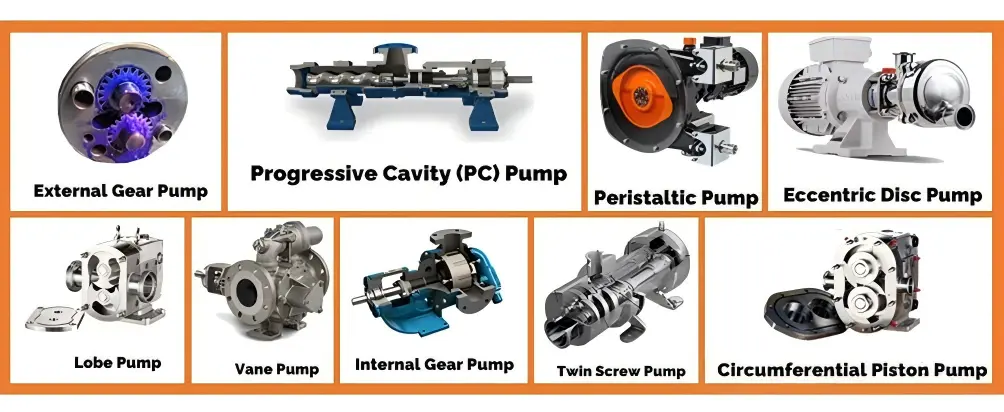
Rotary PD pumps encompass a far more diverse range of designs, differentiated by rotor and stator/housing geometry. These models feature minimal or zero clearances between rotors and their mating casings or stators. Vane pumps, eccentric disc pumps, progressing cavity (PC) pumps and peristaltic pumps adopt direct rotor/contact element construction. This design enables efficient transfer of low-viscosity liquids. PC pumps stand out for their versatility, smoothly conveying fluids spanning low to ultra-high viscosity with high suspended solid loads and minimal flow pulsation. While many peristaltic pumps share similar benefits, they generate moderate pulsation and require periodic tubing replacement. A key advantage of select peristaltic pump designs is their ability to run dry without damage. A primary limitation of contact-type rotary pumps is wear and heat generation caused by friction; as such, PC and eccentric disc pumps require process fluids to possess adequate lubricating properties.
Internal gear, external gear, lobe and circular piston pumps feature two or more rotors with internal clearances. Gear pumps eliminate the need for timing gears, as the rotor profiles simultaneously displace fluid and drive the idler gear rotation, translating to lower procurement costs and simplified maintenance. Due to internally lubricated bearing arrangements, gear pumps exhibit shortened service life when handling fluids with suspended solids, particularly abrasive slurries. Internal gear pumps perform optimally with ultra-high-viscosity substances, whereas external gear pumps are better suited to high-pressure, low-flow metering duties.
Lobe pumps are purpose-built for media containing suspended solids, with smooth contoured rotors that also satisfy stringent sanitary standards. The generous internal clearances standard on most lobe pumps limit their accuracy for low-viscosity fluid metering at low rotational speeds. Circular piston pumps represent an innovative upgrade to conventional lobe pumps, featuring tighter clearances that drastically improve pumping performance for low-viscosity liquids. A critical limitation of circular piston pumps is restricted suitability for high-temperature applications: thermal expansion may cause close-tolerance rotors to seize against the pump casing. Manufacturers address this issue by supplying rotor options engineered with enlarged operating clearances for high-temperature service.
Centrifugal Pump Selection
Centrifugal pumps enjoy widespread adoption and feature a diverse lineup of designs, characterized by straightforward construction, ease of maintenance and versatile performance. Common centrifugal pump configurations include end-suction, split-case and multistage units, with end-suction pumps being the most ubiquitous model. Most original equipment manufacturers (OEMs) offer interchangeable impeller and volute options to match diverse application requirements. End-suction pumps frequently utilize open impellers, which handle low-concentration suspended solids while maintaining favorable Net Positive Suction Head Required (NPSHr) performance. Their uncomplicated design delivers low upfront costs and simplified routine maintenance.
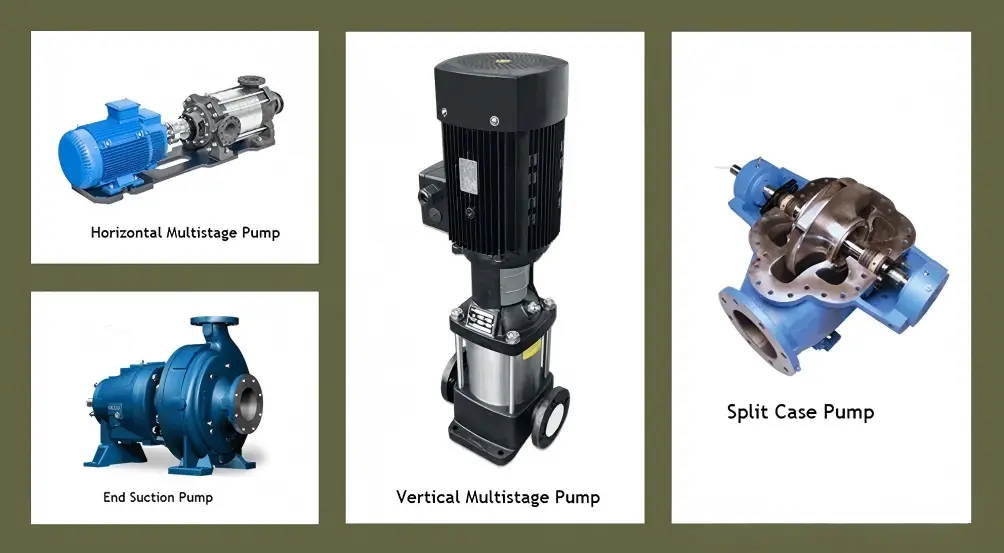
Split-case pumps are optimized for high-flow services and deliver superior efficiency and reliability when pumping clean liquids. Equipped with fully enclosed impellers and wear rings, they are unsuitable for media carrying suspended solids. Split-case pumps demand more complex maintenance and carry higher initial capital expenditure.
Multistage centrifugal pumps incorporate multiple enclosed impellers arranged in series to achieve elevated discharge pressures. Typical applications include boiler feedwater, agricultural irrigation and water pressure boosting systems. Capital and maintenance costs escalate with pump frame size, and multistage units are manufactured in both horizontal and vertical configurations.
Proper pumping technology selection exerts a profound impact on overall system operation. This article covers only fundamental principles, and readers are encouraged to conduct in-depth research into the specific use cases of each pumping technology.